How to observe Northern Lights in Iceland?
Northern Lights are one of the most impressive natural phenomena and Iceland is one of the few places on Earth where it is possible to observe them. In this guide, we give you all the information and resources to best prepare your expedition.
How are Northern Lights formed?
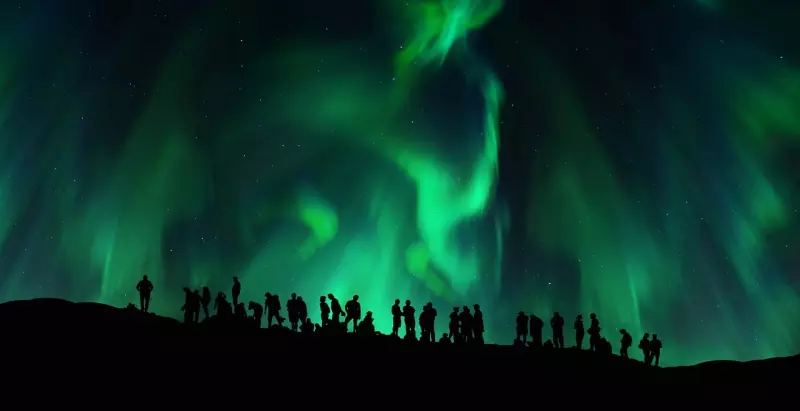
Northern Lights (and Southern Lights in the southern hemisphere) are the result of solar eruptions that produce electrically charged particles in space. When these particle winds come into contact with gaseous particles in the Earth's upper atmosphere, they release photons that give auroras their particular colors. Our planet is protected from these winds, but it is much less protected at the magnetic poles. This is why auroras are only visible in polar regions, where Iceland is located. The colors (white, green, purple or pink) depend on the altitude at which the phenomenon occurs. Northern Lights generally have a green tint: the product of the chemical reaction between solar particles and oxygen.
To learn more, this article explains the phenomenon in simple words. Read article
In Norse mythology, the auroras were the embodiment of the dance of animal spirits or the reflections of the Moon on the armor of the Valkyries (the legendary women who decided who would live and who would die in battles). For some peoples of the American continent, the Northern Lights would represent the souls of the dead. The brighter the aurora, the happier the dead were. Legends about Northern Lights are numerous, this article references some of them.
When can you see them in Iceland?
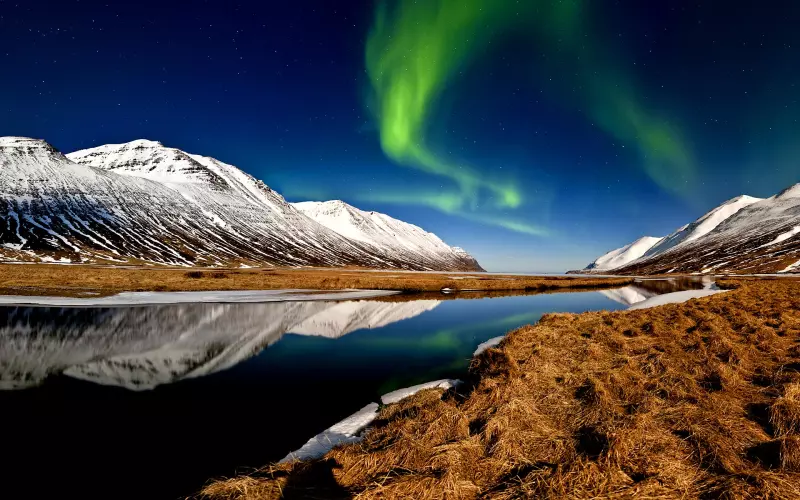
Aurora at Hedinsfjordur
The best period when you have the most chance to see Northern Lights in Iceland is from mid-September to mid-March even though theoretically, we could see them all year round. Unfortunately, in summer the sun hardly sets, making it impossible to observe Northern Lights.
What are the conditions?
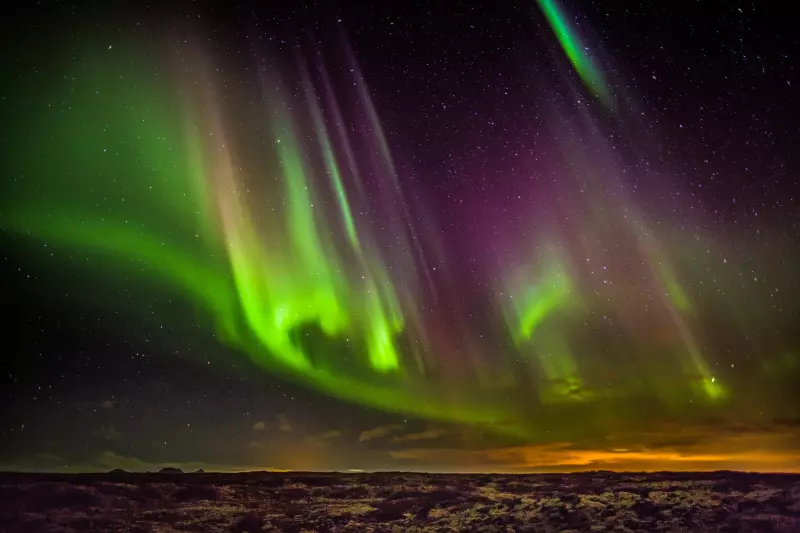
Northern Lights at Alftanes
Several conditions must be met to observe the dance of lights:
• clear weather. If the sky is overcast, clouds will hide the auroras and you won't see anything at all.
• darkness. A dark night with the least light pollution possible and ideally a moonless night. Indeed, the moon and particularly the full moon, acts like a giant streetlight. Get away from urban areas to find optimal darkness, especially if you're in Reykjavik.
• peak solar activity. It is during solar eruptions that colors are most intense. Note that it is also possible to observe auroras outside solar eruption periods, these are called "surprise auroras", which are by definition unpredictable.
Organize yourself or go through an agency?
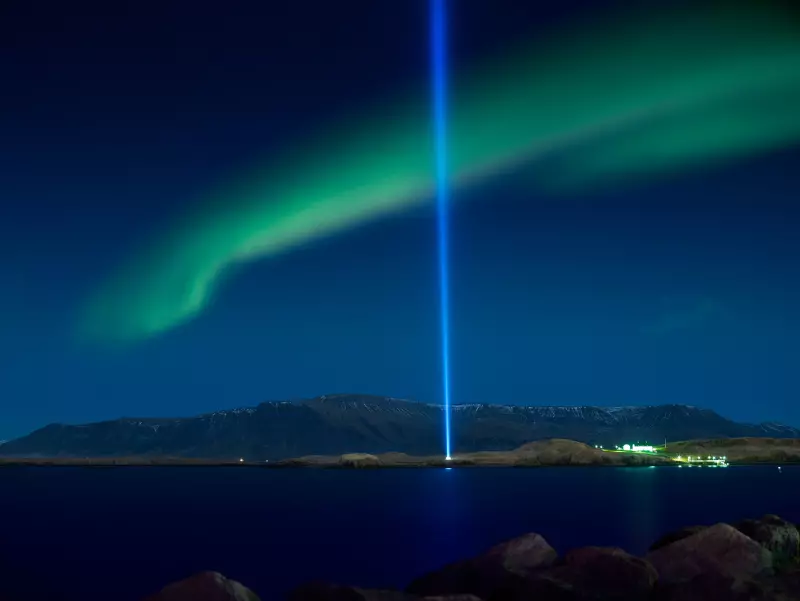
Northern Lights at Fridarsulan
Through an agency
If you don't have a vehicle or want to keep things simple, many agencies departing from Reykjavik offer excursions. You will be accompanied by professionals who know the terrain perfectly and know how to drive in winter conditions. View excursion offers
By yourself
Rent a car to go Northern Lights hunting alone. There are many tools to track and predict Northern Lights in Iceland. However, you'll need to stay vigilant about weather and road conditions. Many people do both: they start with an agency tour and then go independently afterwards.
In winter, roads in Iceland are often snowy and slippery. Be careful!
Tools for hunting Northern Lights in Iceland
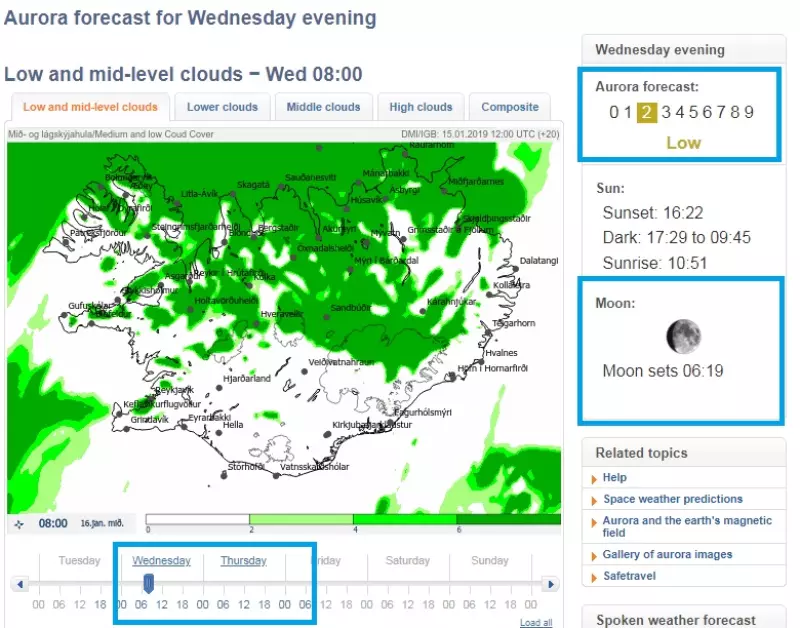
Forecast on the Vedur website
As explained previously, you must meet several conditions to observe the auroras: clear weather, peak solar activity and darkness. Below, three resources to save on your smartphone.
Cloud cover and solar eruption: vedur.is
This weather website will be your best ally. For cloud cover, white areas are places where there are no clouds. Remember to check it regularly to anticipate a snowstorm for example.
The Kp index is a system that measures aurora intensity. The index ranges from 0 to 9, the higher the number, the more likely you are to see a beautiful aurora. This index is not always reliable, don't hesitate to try your luck even if the index is only 2 or 3. Additionally, the alaska.edu site also gives its forecasts for Iceland.
Receive real-time alerts Aurora Alerts
The Aurora Alerts Twitter account broadcasts alerts as soon as an aurora appears.
Road network status road.is
Before rushing to your observation site or after spending hours contemplating the sky, it would be a shame to find out that the road is impassable.
Also prepare:
• suitable footwear and warm clothing (gloves, scarves, hats) to protect you from cold and wind
• a headlamp with red light
• hand warmers
• hot drinks
How long to stay?
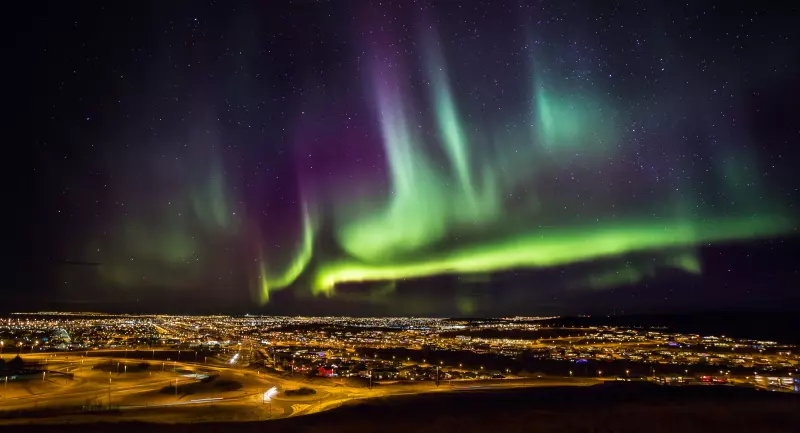
Aurora above Reykjavik
It's difficult to predict Northern Lights observation accurately as weather conditions change quickly in Iceland. To maximize your chances, plan for a good week in winter. You'll have plenty to keep you busy. Note that auroras can last several hours or just a few minutes.
Best places to photograph Northern Lights in Iceland?
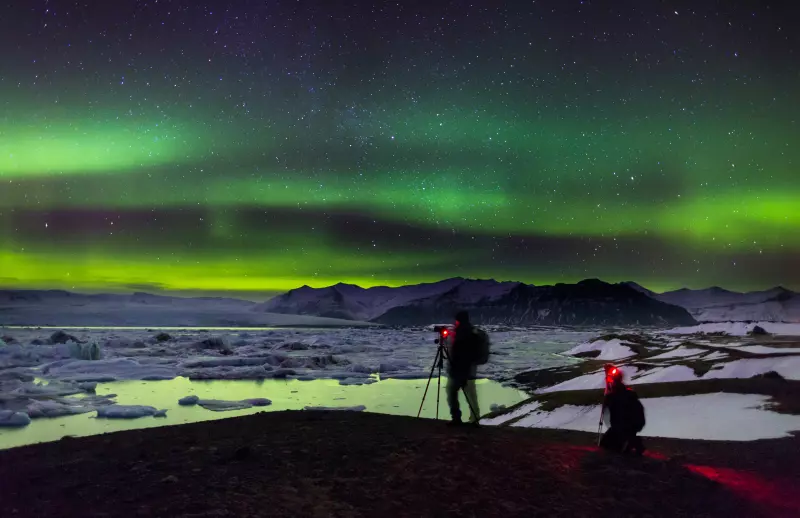
Aurora above Jokulsarlon
The phenomenon is already sublime in itself, so imagine the scene with a waterfall or lagoon in the foreground. We've listed ideas for spots accessible by car by region. Check road conditions before leaving and follow the authorities' advice carefully.
You can find some photos here.
Reykjavik
• Seltjarnarnes
• Perlan ("The Pearl")
• Thingvellir
South
• Skogafoss
• Vík
• Jokulsarlon
Snaefellsnes Peninsula
• Eldborgahraun
• Kirkjufell
West Fjords
• Djúpavík
• Látrabjarg
North
• Ásbyrgi Canyon
• Hvammsfjordur
• Hvitserkur
• Siglufjordur
• Godfoss
East Fjords
How to photograph Northern Lights?
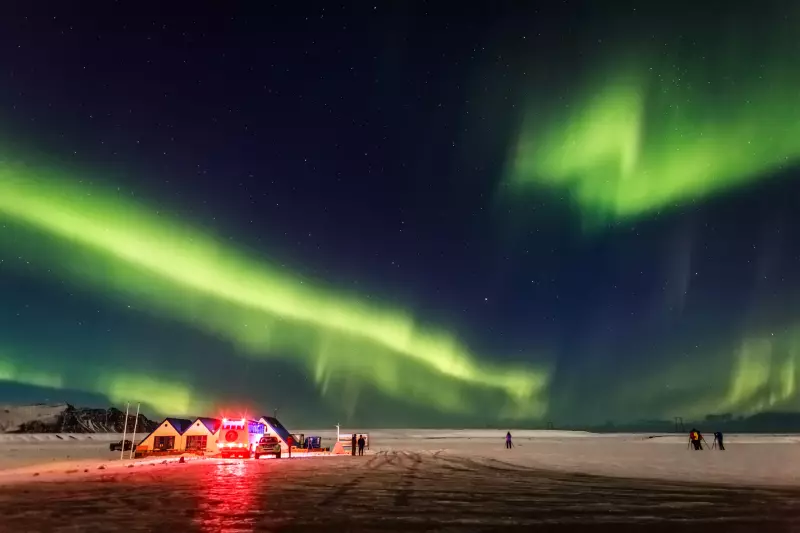
Aurora above Jokulsarlon
A DSLR or mirrorless camera is ideal but any camera allowing long exposures can capture the moment. The latest high-end smartphone generations offer this functionality. The result on your camera will be more flattering than what you see. Camera sensors capture more information than the human eye.
• a tripod: essential for long exposures.
• switch to manual mode if the camera allows it
• a wide-angle lens 18mm in APS-C/24mm in full frame.
• a wide aperture: f2.8 at least. You can try f4 but you'll need to increase exposure time.
• exposure time: 2 to 10s depending on aurora intensity.
• ISO around 1000/1500 (depends on the camera)
• focus at infinity
• 2s timer to avoid vibrations when triggering the shutter.

Ce guide vous a-t-il aidé ?
Une question ? Besoin d'un conseil ?
Rejoindre notre groupe d'entraide Facebook sur le paysPartagez ce guide
Cela pourrait vous intéresser...